March 7, 2026


Most businesses do this the wrong way around.
They get impatient.
They want leads.
They think traffic is the answer.
So they jump into Google Ads, throw money at clicks, and hope the website will somehow do its job once people arrive.
That is where the leak begins.
Because more traffic does not fix a weak website.
It just helps more people see the problem faster.
If your site is slow, clunky, confusing, awkward on mobile, or poorly structured, you need to fix your website before ads. Otherwise, you are paying to send people into a bad experience.
That means wasted clicks.
Lost trust.
Missed enquiries.
Money gone.
That is why the smartest move is often not to buy more traffic.
It is to fix the destination first.
If you want a second set of eyes on your site, start here: Get Your Free Audit
This is one of the biggest traps.
A website can look clean and modern and still perform terribly.
It might have a decent logo.
Nice colours.
A slick hero section.
A few flashy effects.
None of that means it works.
A good business website is not there to win design awards. It is there to help people trust you, understand you, and take the next step. If it fails at that, the design is not helping. It is just decoration.
This is why so many business owners miss serious website technical issues. They judge the site by how it looks to them instead of how it performs for real users.
That is a mistake.
Because real visitors do not care how proud you are of the homepage.
They care whether the site loads quickly, makes sense, works on mobile, and gives them confidence.
If it does not, they leave.
Want to know if your site is helping or hurting? Get Your Free Audit
A lot of business owners say the same thing.
“We just need more people on the site.”
Maybe.
But maybe not.
Sometimes the bigger issue is what happens after the click.
A visitor lands on your page and finds:
That is not a traffic problem.
That is a conversion problem.
And if you ignore that, more traffic simply means more wasted opportunity.
This is why website fixes before ads often deliver a better return than ads themselves. In many cases, the smartest thing you can do is fix your website before ads so the traffic you already have starts working harder.
That is the part many businesses skip.
Ads are an amplifier.
That is all they are.
They amplify what is already there.
If your site is solid, ads can help you scale.
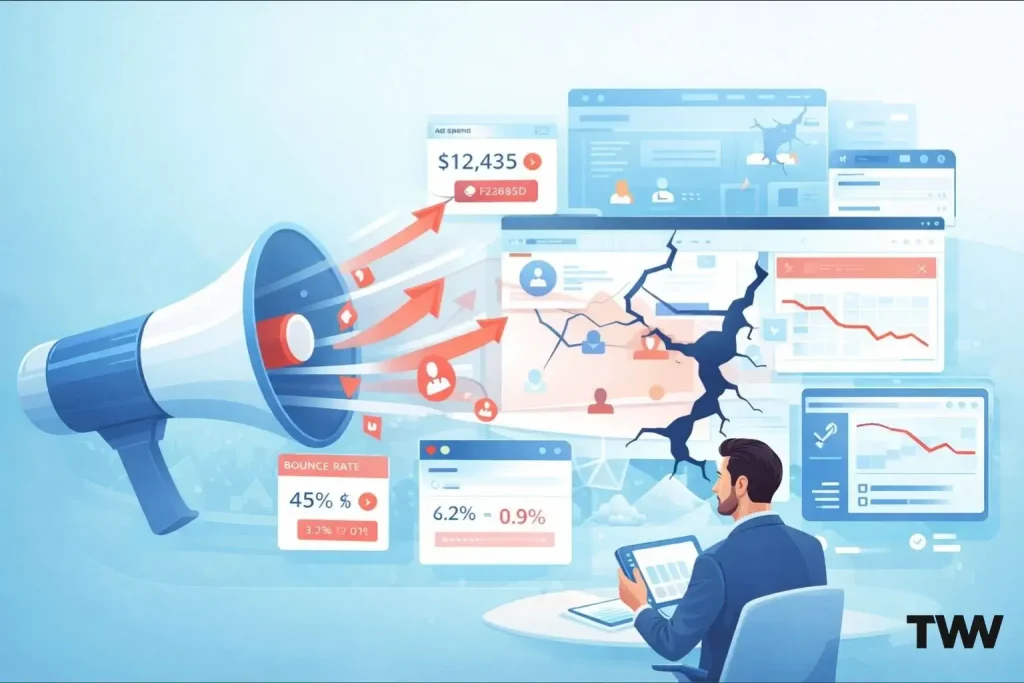
If your site is weak, ads can help you waste money faster.
That might sound blunt, but it is true.
Sending paid traffic to a poor website is like paying to fill a bucket with holes in it. You can keep pouring more water in, but the result does not improve until you deal with the holes.
This is where a lot of businesses get burned.
They blame the ads.
They blame Google.
They blame the agency.
They blame the market.
Meanwhile, the website is the real problem.
That is why any serious marketing strategy should begin with the site itself. Before you try to buy attention, fix your website before ads and make sure the thing people land on is technically sound and commercially useful.
If you are not sure where the holes are, Get Your Free Audit
This is not just about people.
Google notices structure too.
It notices page speed.
It notices mobile usability.
It notices relevance.
It notices poor structure.
It notices when pages do not line up with user intent.
You can have decent content and still underperform because the site itself is weak.
That is why website performance problems matter beyond user experience. They affect SEO, ad quality, engagement, and trust all at once. A messy site creates friction for visitors and confusion for search engines.
That is a bad combination.
No, your website does not need to be perfect.
But it does need to be solid.
Especially if you are serious about growth.
When someone lands on your site, they are making quick judgments.
Can I trust this business?
Do they look switched on?
Is this going to be a hassle?
Do I feel confident contacting them?
That decision happens fast.
If your site feels slow, awkward, generic, outdated, or hard to use, it creates doubt. Not loud doubt. Silent doubt.
And silent doubt kills conversions.
People do not always complain.
They just disappear.
They go back to Google.
They try someone else.
They forget about you.
That is how bad websites lose business every day without the owner even knowing it.
If that stings a bit, good.
It should.
Because once you see your website as a trust-building tool instead of an online brochure, you start asking better questions.
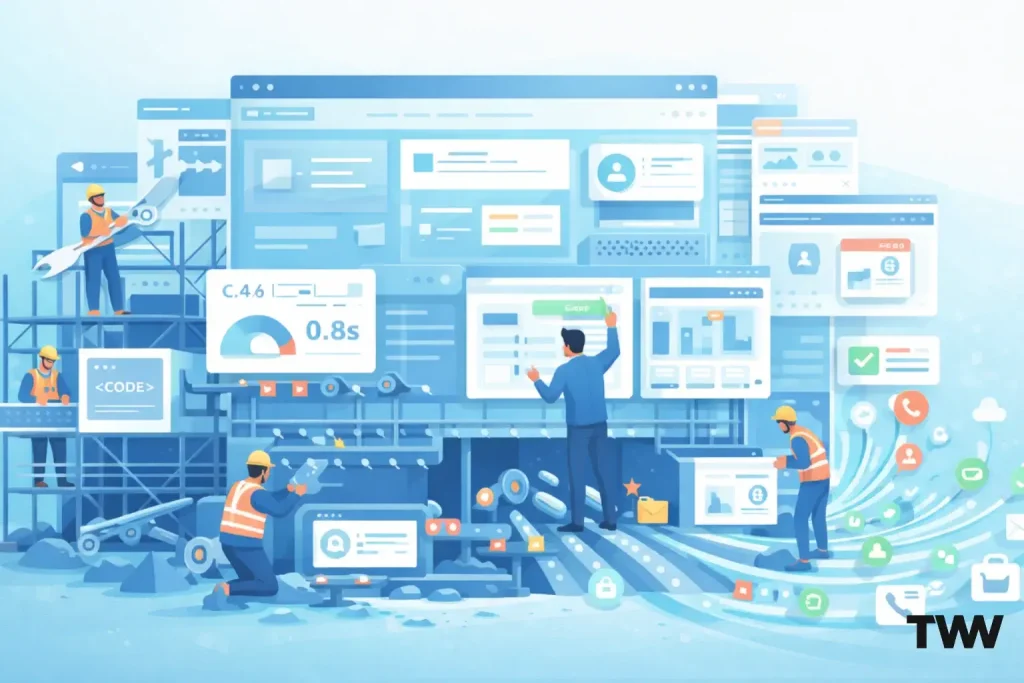
Stop thinking of your website as a digital business card.
Start thinking of it as a working business asset.
Because that is what it is supposed to be.
A strong website helps every other part of your marketing.
A weak one drags everything down.
So before you spend more on Google Ads, before you chase rankings, before you pour more time and money into traffic, ask the harder question:
Is this website actually ready?
If the answer is no, that is not bad news.
That is useful news.
It means you have found the real bottleneck.
And once you fix that, everything else has a better chance of working.
That is the whole point of this message: fix your website before ads and stop paying for clicks that land on a weak foundation.
If you want to see what is holding your website back, Get Your Free Audit
More traffic sounds exciting.
But traffic alone is not the win.
The win is what happens after the click.
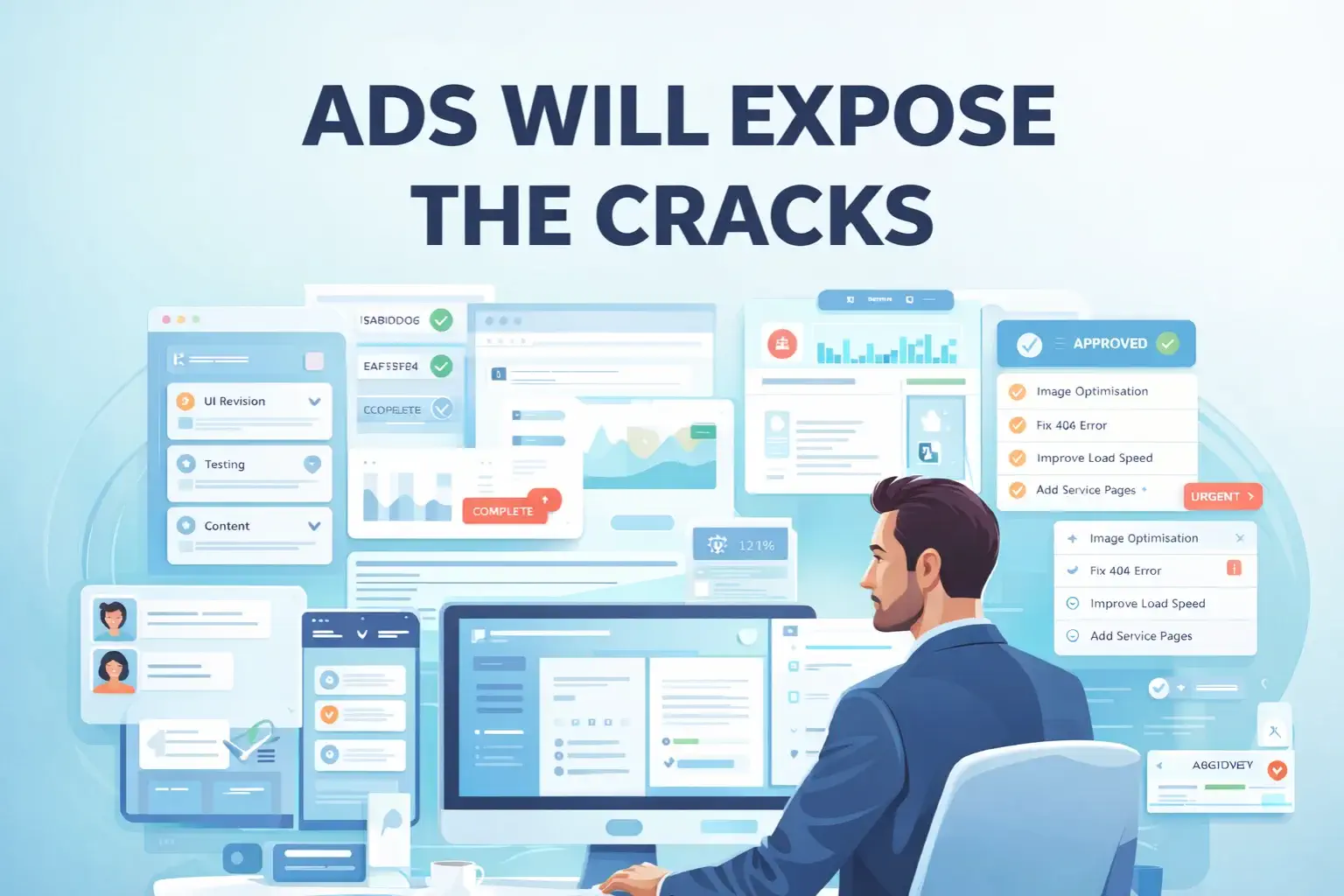
If your website is slow, confusing, weak on mobile, or poorly structured, ads will not rescue it. They will just expose the weakness faster and charge you for the privilege.
Fix the website first.
Then drive traffic.
That is how you stop burning money and start building something that actually works.